

Virginia Whitetail Rut Dates & Deer Movement
Virginia's rut peaks in mid-November. DWR's deer project leader puts the peak of conception at November 16, counted back about 200 days from a fawning peak in the first week of June, and says it comes at the same time every year. DWR biologists add that it runs a little earlier as you move east and a little later as you move west.
Statewide rut window
All of Virginia
Nov 1 to 21
Peak: November 16
DWR's peak of conception. Its biologists call the first three weeks of November the best time to hunt, a little earlier in the east and later in the west.
Regional estimates, and your area can vary. Where these dates come from is below.
2026 season: archery opens in some zones early September, and later in others. Source: Virginia season dates (Virginia DWR). Seasons and zones change, so confirm with the agency before you hunt.
Where do the Virginia rut dates come from?
The deer project leader at Virginia's Department of Wildlife Resources (DWR), Justin Folks, puts the peak of conception at November 16, counting back about 200 days from a fawning peak around the first week of June. He says it holds every year, whatever the weather. DWR biologists Matt Knox and Sarah Peltier say it runs a little earlier in the east and later in the west.
The window above follows DWR, whose bow hunter survey, buck harvest by day (2003 to 2019) and mature buck records all point to the first three weeks of November. DWR's dates are statewide, but in a DWR-funded Virginia Tech study in Bath County, west of the Blue Ridge, fawns were born at a median of June 16 in 2019 and 2020, about two weeks after the statewide peak, so expect a later mountain rut.
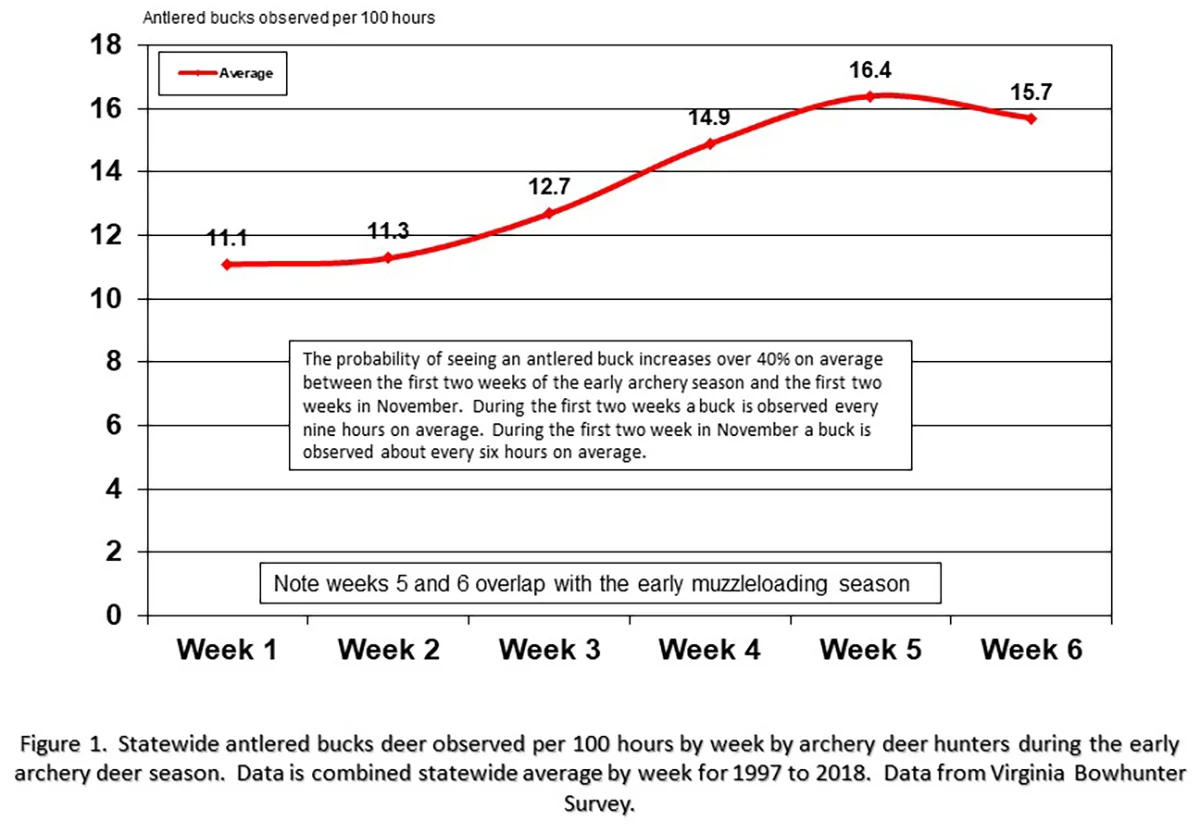
Sources: Virginia DWR, Virginia's Deer with Justin Folks: Fawning Dates are Key to Rut Timing; Virginia DWR, The First Two Weeks of November and the Bucks are on the Move: Part 1; Virginia DWR, The First Two Weeks of November and the Bucks are on the Move: Part 2; Virginia DWR, The Virginia Appalachian Deer Study: How Fawns are Faring West of the Blue Ridge Mountains.
How do the 2026 seasons in Virginia line up with the rut?
Gun and late seasons split at the Blue Ridge, and the 2026 to 2027 deer dates are:
- Youth and apprentice weekend: September 26 and 27
- Early archery: October 3 to November 13
- Early muzzleloader: October 31 to November 13
- Firearms, west of the Blue Ridge: November 14 to December 12 (national forest, November 14 to 28)
- Firearms, most of the east: November 14 to January 2
- Firearms, Chesapeake, Virginia Beach and eastern Suffolk: October 1 to November 30
- Late archery and muzzleloader, most of the west: December 12 to January 2 (archery from December 13)
Archery and muzzleloader cover the first two weeks of the window, and the November 16 peak falls two days after the gun opener. DWR counts early muzzleloader and the first week of gun season as peak rut activity, and says the rut is dying down by the second week.
Sources: Virginia DWR, deer hunting regulations and seasons, 2026-2027; Virginia DWR, Virginia's Deer with Justin Folks: Fawning Dates are Key to Rut Timing; Virginia DWR, The First Two Weeks of November and the Bucks are on the Move: Part 2.
How many deer do Virginia hunters take?
Virginia hunters reported about 227,000 deer in the 2025 to 2026 seasons, up about 10 percent from the year before, and just over 108,000 were antlered bucks. Firearms took about 143,000, muzzleloaders about 51,000 and archers about 33,000. These are reported deer, a known minimum, and still preliminary.
Sources: Virginia DWR, 2025-2026 deer kill summary; Virginia DWR, deer kill data.
Where is the public ground in Virginia?
DWR's 47 wildlife management areas cover nearly 225,000 acres, and the George Washington and Jefferson National Forests add nearly 1.8 million acres, mostly in western Virginia. On both, the limit is one deer a day, and permanent stands and feeding are banned. DWR's Public Access Lands for Sportsmen (PALS) program opens private land too, including about 30,000 acres in Dickenson and Wise counties, with a permit.
Sources: Virginia DWR, wildlife management areas locator map (PDF); USDA Forest Service, George Washington and Jefferson National Forests, about the area; Virginia DWR, deer hunting regulations and seasons, 2026-2027; Virginia DWR, public hunting lands; Virginia DWR, general information and hunting regulations.
Which Virginia rules change a rut hunt?
- East of the Blue Ridge you can take three antlered deer a license year, west of it two.
- If you kill two bucks in Alleghany, Bath, Highland or Rockbridge, at least one needs four or more points an inch or longer on one side.
- Hunting over bait is illegal. Feeding deer is banned statewide from September 1 to the first Saturday in January, and all year in counties within 25 miles of a known CWD-positive deer. Food plots are not bait.
- Crossbows are legal for anyone in archery season, and bows stay legal in the muzzleloader and gun seasons.
- Every hunter must wear a solid blaze orange or pink hat or upper-body layer in any firearms deer season and on youth weekend. In muzzleloader season only muzzleloader hunters need it, and not in a stand.
- CWD has been confirmed in 18 counties in northern and southwestern Virginia, and testing is mandatory on the November 14 opener in Bland, Grayson, Patrick, Shenandoah, Smyth, Tazewell and Wythe. Whole carcasses from out of state are banned; bring boned meat or quarters without the spine or head.
- Scents and lures made with natural deer urine are illegal to use or carry while hunting or scouting.
Sources: Virginia DWR, deer hunting regulations and seasons, 2026-2027; Virginia DWR, general information and hunting regulations; Virginia DWR, legal use of firearms and archery tackle; Virginia DWR, chronic wasting disease; Virginia DWR, carcass transport; Virginia DWR, what's new for the 2026-2027 hunting and trapping seasons.
Checked against the linked sources on September 30, 2026. Seasons and rules change every year, so confirm with the agency before you hunt.
Hunting Virginia this season?
Each window above covers a big piece of the state. RackIQ narrows it to the Virginia ground you hunt and that day's wind, then makes one call: The Scored Call™. It gets sharper every hunt you log.
Free to start.
Common questions
When does the rut peak in Virginia?
DWR puts the peak of conception at November 16, counted back about 200 days from a fawning peak around the first week of June, and says it falls at the same time every year.
Is the rut later in the mountains?
A little. DWR says the rut runs a little earlier as you move east and a little later as you move west. In a DWR-funded Virginia Tech study in Bath County, fawns were born at a median of June 16, about two weeks after the statewide fawning peak.
What is the best time to hunt the Virginia rut?
DWR's biologists call the first three weeks of November the best time to hunt, when bucks are on the move and the odds of an older buck are highest. Its deer project leader says to hunt the weeks before, during and after November 16, whatever the thermometer says.
Keep reading
Rut dates for other states: Maryland · Delaware · New Jersey · Connecticut · or see every state.
On what moves deer once you are out there: The Rut Clock, The 48-Hour Window, and the rest of Field Notes.